Why Black Ink Responds Best to Laser Removal
Black ink is the easiest pigment to fade. Because it absorbs the full light spectrum, a Q-switched or picosecond laser can shatter those particles efficiently, and your body's lymphatic system clears the fragments over the following weeks. That said, black ink is also the most common pigment in cover-up attempts, so many Gilbert clients arrive with layered work — an old black outline reworked with heavy shading. Layered ink takes more sessions because each pass has to break down pigment at multiple depths. I map the ink density at your first consult and give you a realistic session count, not a sales number.
Gilbert's Sun Is the Biggest Variable in Your Results
This is the thing nobody warns you about in Maricopa County: laser-treated skin that gets sun exposure can hyperpigment, and in our hot desert climate with very hot summers, that risk runs from roughly April through October. If you're hiking the Riparian Preserve trails, floating the Salt River, or working outdoors in Power Ranch, you'll need to keep the treated area covered and on strict SPF between sessions. I won't treat actively tanned or sunburned skin — it raises blistering and pigment-change risk — so many clients schedule their heavier treatment blocks in the mild winter months when daily sun exposure is easier to control.
What Actually Happens Session to Session
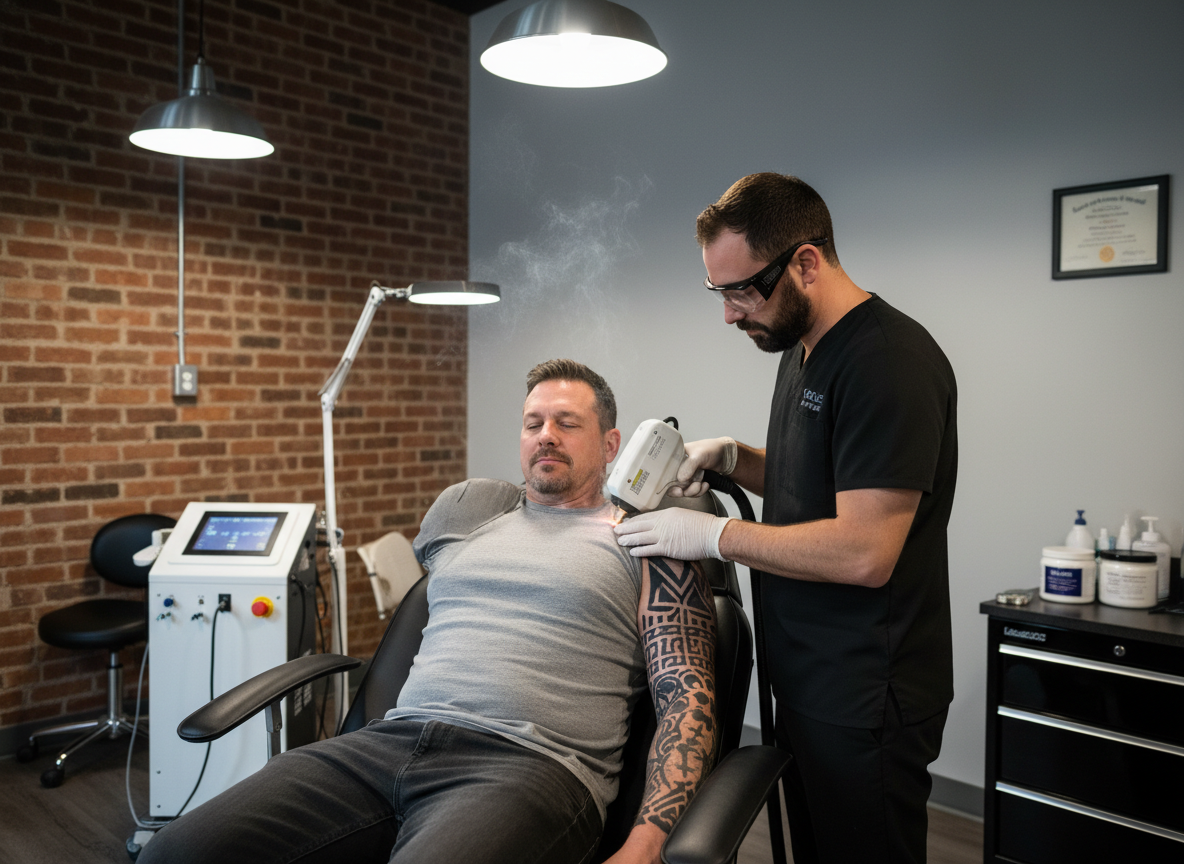
Each visit takes minutes, not hours. The laser pulses feel like a rubber band snap, and we cool the skin before and after. Over the next one to three weeks the area frosts, blisters lightly in some spots, then flakes and fades as your immune system does the real work. Sessions are spaced six to eight weeks apart — going sooner doesn't speed anything up because the lymphatic clearing is the bottleneck. Black-only tattoos on lighter skin tones often fade noticeably within three to five sessions; dense, old, or layered work can take considerably more. Anyone promising a fixed session count before seeing your ink is guessing.
Aftercare That Works in the East Valley
Healing here is different than in humid climates. Gilbert's dry air pulls moisture out of healing skin fast, so I have clients keep a thin ointment layer going for the first several days and run humidifiers at night if their home HVAC is drying everything out. No pools, no Lake Pleasant weekends, no heavy sweating workouts for the first 48 hours — sweat and bacteria on freshly lasered skin invite infection. I hand out written aftercare at every appointment and check the area at your next visit before treating again. If something looks off between sessions, call me rather than waiting it out.
Technician insight
In Gilbert, the thing that catches most people out with black ink removal is our sun. Clients from Agritopia to San Tan Ranch come in tanned from a summer of outdoor life, and I can't safely treat tanned skin — it dramatically raises the risk of long-term pigment change. The smartest move here is starting your course in late fall or winter, when our mild months make strict sun protection on the treated area actually manageable.
Layered wrist script on a Power Ranch client
A client from Power Ranch came in with a black script tattoo on her wrist that had been reworked once years ago, so the ink sat at two depths and had barely faded from a removal course she'd started elsewhere. I photographed a baseline, ran a patch test, then used a smaller spot size with adjusted fluence to reach the deeper layer without overtreating the surface. After several sessions spaced eight weeks apart — timed through the winter to avoid sun complications — the script faded enough that she moved on to a cover-up with her own artist.
Black Ink Tattoo Removal Services We Offer
✓Full Black Ink Tattoo Removal
Complete removal of black-only tattoos using Q-switched laser passes spaced six to eight weeks apart. Best results for names, text, outlines, and black-and-grey work.
✓Fading for Cover-Up Prep
Lighten an existing black tattoo so a new design can go over it. Fewer sessions than full removal, and it opens up far better cover-up options for artists in Gilbert, Chandler, and Mesa.
✓Black Outline and Linework Removal
Fine black lines and script sit shallower in the skin and often respond faster than dense shading. A focused option for small wrist, finger, and neck pieces.
✓Layered and Reworked Tattoo Treatment
Old tattoos that were re-inked or shaded over hold pigment at multiple depths. We adjust spot sizes and fluence across passes to reach each layer without overcooking the surface.
✓Spot and Partial Removal
Remove or lighten a single element — a name, a date, one section of a larger piece — while leaving the rest of the tattoo intact.
✓Touch-Up and Stubborn Residual Ink Treatment
For faint ghosting or stubborn pigment left after a course elsewhere, targeted passes with adjusted settings chase down what the earlier sessions missed.
Black Ink Tattoo Removal Cost in Arizona
| Service | Typical Range | What Affects It |
|---|---|---|
| Small black tattoo (under 3 inches, e.g. wrist or finger piece) | $100–$200 per session | Fine linework often fades fastest; layered or old ink adds sessions |
| Medium black tattoo (3–6 inches) | $200–$400 per session | Density and age of ink matter more than size alone |
| Large black or black-and-grey piece (over 6 inches) | $400–$600+ per session | May be treated in sections across visits |
| Cover-up fading (partial lightening) | $100–$300 per session | Usually fewer sessions than full removal — we stop at cover-up-ready fade |
| Initial consultation and patch test | Free | Includes photo baseline and honest session estimate |
Ranges are typical for Arizona and confirmed with an exact written quote before any work starts.
How it works
- 1
Free Consultation and Ink Assessment
We look at your tattoo under good light, discuss your skin tone, ink age, and any prior removal work, and photograph the area as a baseline. You get an honest session estimate and per-session pricing before anything is booked.
- 2
Patch Test and First Session
For most clients we start with a small test spot or a conservative first pass to see how your skin responds. Treatment itself takes minutes — cooling, laser pulses, post-treatment ointment, and a bandage.
- 3
Healing Window
Keep the area clean, moisturized, and out of the Gilbert sun for the first weeks. Light blistering and flaking are normal; we give you written aftercare and stay reachable if anything looks unusual.
- 4
Repeat Sessions Every Six to Eight Weeks
Your body clears fragmented ink between visits, so spacing matters more than frequency. At each visit we compare photos, adjust settings, and treat again once the skin is fully healed.
- 5
Final Fade Check
Once the ink has faded to the level you want — full removal or cover-up-ready lightening — we stop and review the result together. No selling sessions you don't need.
Pricing
Black ink removal is priced per session by tattoo size, typically ranging from around $100 for a small piece to several hundred dollars for larger work. Most black-only tattoos need multiple sessions spaced six to eight weeks apart, and I'll give you a realistic total estimate at your free consult — not a lowball first session followed by upsells.